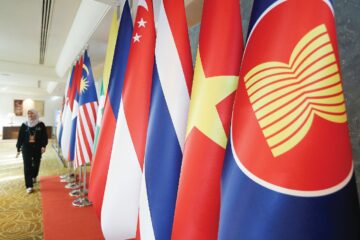
As the United States prepares to implement steep reciprocal tariffs against several trading partners, Malaysian Prime Minister Datuk Seri Anwar Ibrahim is taking a proactive stance by rallying ASEAN leaders for a unified regional response.
In his dual role as Prime Minister and Finance Minister, Anwar announced that Malaysia, as the current chair of ASEAN, will initiate urgent consultations with member states to formulate a joint position against the tariff hike, which many fear could significantly impact regional trade.
Anwar has already reached out to key regional counterparts, including Thailand’s Prime Minister Paetongtarn Shinawatra and Indonesian President Prabowo Subianto. Discussions are also planned with Philippine President Ferdinand Marcos Jr. and Singapore’s newly appointed Prime Minister Lawrence Wong.
“This initiative is vital to ensure that the ASEAN response is cohesive and that the principle of fairness prevails in international trade,” said Anwar during a media briefing after performing Friday prayers at the Prima Saujana Mosque.
“Although Malaysia’s tariff rate is not the highest, we are still affected. It is in our collective interest to respond in solidarity,” he added.
The White House announced that starting April 5, 2025, a 10 per cent baseline tariff will be imposed on imports from all countries. However, a second phase of elevated reciprocal tariffs—targeting nations with which the US has significant trade deficits—will roll out on April 9, 2025.
Among the most affected are Indo-China nations, with Cambodia facing a staggering 49 per cent tariff, followed by Laos (48%), Vietnam (46%), and Myanmar (44%). Thailand (36%), Indonesia (32%), Brunei and Malaysia (24%), the Philippines (17%), and Singapore (10%) are also on the list with varying levels of impact.
Anwar emphasized that ASEAN must present a united front in urging the US to re-evaluate the move, which he warned could strain multilateral trade relations and disproportionately affect emerging economies.
For more details, visit the original article here.