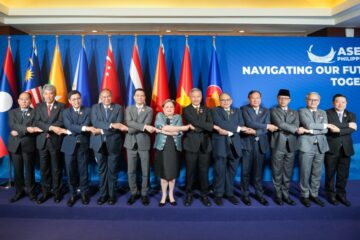
Malaysia has continued to reap significant economic benefits from deeper ASEAN integration, with stronger regional trade, investment flows and supply chain connectivity reinforcing the country’s resilience amid an increasingly complex global economic environment. According to Bank Negara Malaysia (BNM) Governor Datuk Seri Abdul Rasheed Ghaffour, ASEAN’s growing economic integration has played an important role in strengthening Malaysia’s long-term growth prospects while enhancing the region’s collective competitiveness.
Speaking at the Sasana Symposium 2026, the Governor highlighted that ASEAN has evolved beyond a regional trading bloc into a highly interconnected economic community, where closer collaboration enables member states to better navigate external shocks, diversify supply chains and attract higher-quality investments.
ASEAN Integration Driving Economic Resilience
Over the past decades, ASEAN has steadily strengthened economic cooperation through trade liberalisation, investment facilitation and improved regional connectivity.
For Malaysia, these initiatives have translated into:
- Stronger intra-ASEAN trade
- Greater foreign direct investment (FDI)
- More resilient regional supply chains
- Enhanced cross-border business opportunities
- Improved economic diversification
As global trade patterns continue to evolve, deeper regional integration has become increasingly important in reducing external vulnerabilities while creating new opportunities for businesses and investors throughout Southeast Asia.
Building More Connected Regional Supply Chains
Supply chain resilience has become a strategic priority following recent global disruptions.
ASEAN’s integrated manufacturing ecosystem allows member states to leverage complementary strengths across industries including:
- Electronics and semiconductors
- Automotive manufacturing
- Medical devices
- Food processing
- Digital services
- Green technologies
Malaysia’s participation within these regional production networks has strengthened its role as an important manufacturing, logistics and investment hub while supporting higher-value industrial activities. Greater connectivity among ASEAN economies also enables businesses to respond more effectively to changing global demand and geopolitical developments.
Expanding Investment Opportunities Across ASEAN
ASEAN remains one of the world’s most attractive investment destinations due to its large consumer market, strategic geographic location and expanding middle-income population.
Closer economic integration has encouraged stronger cross-border investment by:
- Improving market accessibility
- Facilitating regional business expansion
- Enhancing regulatory cooperation
- Supporting infrastructure development
- Encouraging innovation and digital transformation
For Malaysia, these developments have helped strengthen investor confidence while creating new opportunities for domestic enterprises to expand throughout the region.
Strengthening Regional Financial Cooperation
Beyond trade and investment, ASEAN integration has also encouraged closer financial cooperation among member states.
Central banks and financial institutions are increasingly working together to improve payment connectivity, strengthen financial stability and promote more efficient cross-border transactions.
These initiatives support businesses operating across multiple ASEAN markets while making regional commerce more seamless and accessible for consumers and enterprises alike.
As financial systems become more interconnected, greater cooperation also enhances the region’s ability to respond collectively to global economic uncertainties.
Positioning ASEAN for Sustainable Long-Term Growth
With a combined population exceeding 680 million people and one of the fastest-growing economic regions globally, ASEAN continues to strengthen its position as an increasingly influential driver of international growth.
Malaysia’s experience demonstrates how regional integration can deliver tangible economic benefits by:
- Improving resilience against global shocks
- Supporting productivity and innovation
- Encouraging sustainable investment
- Expanding market opportunities
- Promoting inclusive economic development
Continued collaboration among member states will be essential in ensuring ASEAN remains competitive as technological transformation, sustainability priorities and evolving global supply chains reshape the international economy.
Looking Ahead
As ASEAN advances towards deeper economic integration, Malaysia is expected to continue benefiting from stronger regional partnerships that enhance trade, investment and financial cooperation.
The remarks by Bank Negara Malaysia underscore the growing importance of regional collaboration in building a more resilient and prosperous Southeast Asia. By strengthening connectivity, fostering innovation and promoting sustainable economic development, ASEAN is positioning itself not only as a major global production hub but also as one of the world’s most dynamic and resilient regional economies.