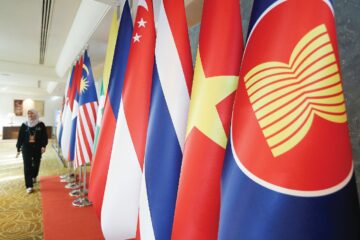
Greater ASEAN unity and deeper regional cooperation are essential to unlocking the vast economic potential of the South China Sea, transforming one of the world’s most strategically important maritime regions into a driver of sustainable growth, energy security and shared prosperity. According to experts, a collective ASEAN approach would enable member states to maximise the region’s abundant natural resources while strengthening the bloc’s strategic influence and long-term economic resilience.
Stretching across one of the world’s busiest maritime corridors, the South China Sea supports global trade, fisheries, offshore energy resources and international shipping. Beyond its geopolitical significance, the region represents a major opportunity for ASEAN to advance regional integration through collaborative resource management, environmental protection and cross-border economic development.
A Strategic Economic Asset for ASEAN
The South China Sea is estimated to contain significant reserves of oil, natural gas and fisheries resources, while serving as a vital maritime route connecting the Indian and Pacific Oceans.
Every year, trillions of dollars in global trade pass through these waters, making the region indispensable to international commerce, manufacturing supply chains and energy transportation. For ASEAN economies, the sea represents not only a strategic waterway but also a foundation for long-term economic development through sustainable utilisation of marine resources.
Experts argue that closer regional coordination could unlock new opportunities in:
- Offshore energy development
- Sustainable fisheries management
- Marine biodiversity conservation
- Maritime logistics and shipping
- Blue economy industries
- Scientific and environmental research
Strength Through Regional Cooperation
Rather than allowing competing interests to limit development, analysts suggest ASEAN can strengthen its collective position by pursuing greater cooperation in managing shared maritime resources.
A unified regional framework would enable member states to:
- Enhance investor confidence
- Promote joint economic initiatives
- Improve maritime governance
- Strengthen environmental stewardship
- Reduce duplication of infrastructure and development efforts
By acting collectively, ASEAN would also reinforce its long-standing principle of regional centrality while engaging external partners from a position of greater unity and strategic confidence.
Advancing the Blue Economy
The concept of the blue economy is becoming increasingly important throughout Southeast Asia as governments seek sustainable ways to generate economic growth while preserving marine ecosystems.
Responsible development of the South China Sea could support industries such as:
- Renewable offshore energy
- Sustainable aquaculture
- Marine biotechnology
- Coastal tourism
- Green shipping
- Ocean-based innovation
Balancing economic development with environmental conservation would help ensure that the region’s natural assets continue to benefit future generations while supporting ASEAN’s broader sustainability goals.
Reinforcing ASEAN Centrality
The call for greater unity comes at a time when the South China Sea remains a focal point of regional diplomacy and international attention.
As negotiations continue towards a long-awaited Code of Conduct between ASEAN and China, maintaining ASEAN cohesion is increasingly viewed as essential for preserving regional stability and ensuring that economic opportunities are not overshadowed by geopolitical competition. Recent ASEAN ministerial discussions have reiterated the importance of dialogue, adherence to international law and peaceful management of maritime issues.
A stronger collective approach would allow ASEAN to continue serving as the primary platform for regional cooperation while safeguarding both economic interests and maritime security.
A Shared Vision for Sustainable Prosperity
Experts believe that unlocking the South China Sea’s economic potential requires looking beyond territorial considerations towards long-term regional prosperity.
Through greater collaboration, ASEAN could develop shared mechanisms for resource management, encourage joint investment projects and create broader economic opportunities that benefit both claimant and non-claimant member states alike. Such cooperation would strengthen regional resilience while supporting inclusive economic growth across Southeast Asia.
Looking Ahead
As ASEAN continues to deepen economic integration, the South China Sea represents one of the region’s greatest opportunities for collaborative growth. By strengthening unity, promoting responsible resource management and advancing a shared vision for the blue economy, ASEAN can unlock the full economic value of one of the world’s most strategically significant maritime regions.
A coordinated regional approach would not only reinforce ASEAN’s central role in shaping the future of Southeast Asia but also demonstrate how cooperation can transform shared challenges into lasting opportunities for sustainable development, economic resilience and regional prosperity.