
Thailand has strengthened its ambition to become a leading artificial intelligence hub in Southeast Asia through a new national AI ecosystem initiative launched in collaboration with Huawei.
The initiative brings together government agencies, technology providers, universities, developers and industry partners to accelerate AI adoption across the Thai economy. A central commitment is Huawei’s plan to train at least 40,000 AI developers, helping Thailand build the skilled workforce required to support long-term digital transformation.
The programme reflects Thailand’s strategy to develop an integrated AI economy supported by infrastructure, talent, commercial applications and responsible governance. It also positions the country to play a greater role in the development of artificial intelligence across ASEAN.
Building a National AI Ecosystem
Thailand’s AI ambitions extend beyond attracting technology investment. A competitive ecosystem requires coordination among infrastructure providers, educational institutions, businesses, startups and policymakers.
The initiative is expected to support development in several key areas:
- Cloud and computing infrastructure
- AI research and commercialisation
- Workforce and developer training
- Industry-specific applications
- Startup and innovation support
- Data governance and cybersecurity
- Public-sector digital transformation
By connecting these areas, Thailand aims to accelerate the transition from AI research and training to practical implementation.
Developing 40,000 AI Professionals
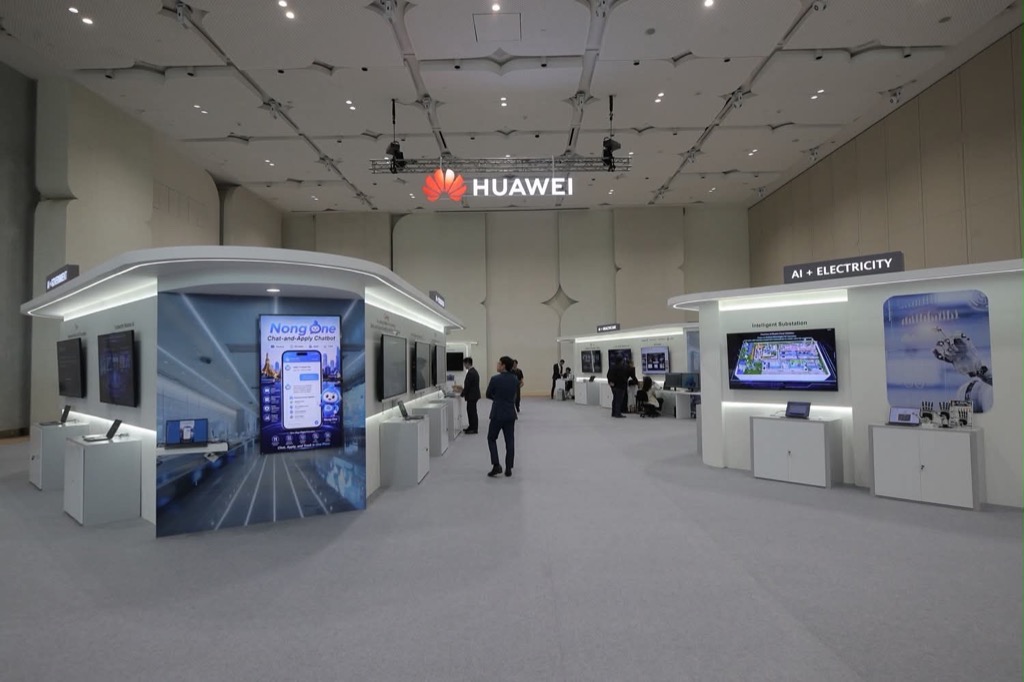
Huawei’s commitment to train at least 40,000 developers is intended to expand Thailand’s pool of professionals in areas such as machine learning, cloud computing, data engineering, cybersecurity and enterprise AI deployment.
A stronger local talent base could help Thailand address growing skills shortages while making the country more attractive to multinational companies seeking regional bases for AI development, cloud services and technology-enabled operations.
The initiative also builds on previous cooperation between Huawei, Thai universities and government agencies in cloud and AI education.
Accelerating Adoption Across Major Industries
The economic impact of AI will depend on its practical use across Thailand’s key industries.
Potential applications include:
- Healthcare diagnostics and digital services
- Personalised tourism experiences
- Smart agriculture and production forecasting
- Manufacturing automation
- Financial services and fraud detection
- Retail, logistics and supply-chain management
- Energy and public administration
Thailand has identified healthcare, tourism and agriculture among the priority sectors where AI could improve productivity, service quality and public welfare.
Strengthening Thailand’s Regional Position
Thailand is competing with other ASEAN economies to attract investment in AI, data centres, semiconductors and advanced digital industries.
Its advantages include a large domestic market, established manufacturing sector, expanding digital infrastructure and a strategic location in mainland Southeast Asia.
The national AI initiative could strengthen Thailand’s ability to develop solutions for neighbouring markets, particularly technologies adapted to Southeast Asian languages, industries and operating environments.
This regional focus may help Thailand become not only a user of global AI technologies but also a developer and exporter of locally relevant solutions.
Creating Opportunities for Businesses and Startups
A more developed AI ecosystem could help large businesses improve automation, analytics and digital services while giving startups greater access to technical resources, infrastructure and industry partnerships.
Local AI development may also reduce reliance on imported applications that do not fully reflect Thai-language requirements, local business practices or regulatory conditions.
However, ensuring that smaller businesses benefit will require affordable access to computing resources, practical training and implementation support.
Responsible and Inclusive AI Growth

As AI adoption increases, Thailand will need clear standards for privacy, security, transparency and accountability.
Responsible governance will be particularly important in healthcare, finance, education and government services, where inaccurate or biased systems could have serious consequences.
The country must also manage wider challenges including workforce disruption, unequal access to technology and the environmental impact of expanding digital infrastructure.
Training developers is an important foundation, but broader reskilling programmes will also be needed to prepare employees across different sectors to work effectively with AI.
Looking Ahead
The partnership between Thailand and Huawei marks an important step in the country’s transition towards an AI-driven economy.
Its long-term success will depend on whether training programmes lead to meaningful employment, businesses are able to deploy AI effectively, and local developers can create commercially viable solutions for Thailand and the wider ASEAN market.
By combining infrastructure, workforce development, academic cooperation and industry implementation, Thailand is building the foundations of a national AI ecosystem capable of supporting investment, innovation and regional economic growth.