Malaysia and Türkiye are working towards finalising a new ASEAN–Türkiye Plan of Action by mid-2027, establishing a broader framework for cooperation following Türkiye’s elevation to become ASEAN’s 12th Dialogue Partner.
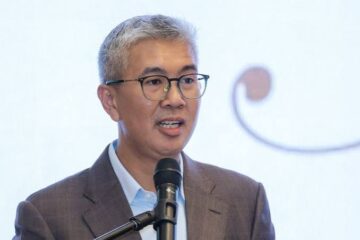
Malaysia, serving as ASEAN’s Country Coordinator for Türkiye, will work closely with Ankara to develop the plan and translate the upgraded partnership into practical initiatives across economic, technological, educational and other areas of mutual interest, Malaysian Ambassador to Türkiye Adlan Mohd Shaffieq said.
The move marks an important stage in ASEAN–Türkiye relations following the conferment of full Dialogue Partner status on Türkiye during the 59th ASEAN Foreign Ministers’ Meeting and Related Meetings in Manila in July 2026. Malaysia subsequently began coordinating the next steps needed to operationalise the expanded relationship.
From Sectoral Cooperation to Full Dialogue Partnership
Türkiye’s new status substantially expands the institutional foundation for engagement with Southeast Asia.
Prior to its elevation, Türkiye had worked with ASEAN through a Sectoral Dialogue Partnership, guided by the ASEAN–Türkiye Practical Cooperation Areas 2024–2028. That framework covers areas including trade and investment, tourism, education, food and agriculture, human-resource development, transnational crime and humanitarian mine action.
ASEAN and Türkiye had also been exploring newer areas such as cybersecurity, digital integration, the green economy, public health, supply-chain resilience, smart agriculture, disaster management and women’s empowerment.
Full Dialogue Partner status creates an opportunity to broaden and structure this cooperation further.
ASEAN’s current external-relations framework lists Türkiye alongside Australia, Canada, China, the European Union, India, Japan, New Zealand, South Korea, Russia, the United Kingdom and the United States as Dialogue Partners.
Malaysia Takes Coordinating Role
Malaysia is now playing a central role in facilitating the next phase of the relationship.
Adlan said Malaysia stands ready to work closely with Türkiye to complete the ASEAN–Türkiye Plan of Action by the middle of 2027. The plan is expected to provide a structured roadmap for future cooperation between Ankara and the 11-member Southeast Asian bloc.
Malaysia’s coordinating role was formally reflected in August, when Malaysian Ambassador to ASEAN Datin Sarah Al Bakri Devadason met Türkiye’s Ambassador to ASEAN Prof. Dr. Talip Küçükcan in Jakarta. Malaysia’s Foreign Ministry described the meeting as the first official engagement between the two countries in their new capacities following Türkiye’s elevation to ASEAN Dialogue Partner status.
The discussions focused on procedures and next steps required to operationalise ASEAN–Türkiye Dialogue Relations.
Economic Cooperation Opens New Opportunities
Economic ties are expected to become an important component of the expanded ASEAN–Türkiye relationship.
Türkiye occupies a strategic geographical position connecting Europe, the Middle East and Asia, while ASEAN represents one of the world’s major emerging economic regions. Stronger institutional links could therefore create new opportunities in trade, investment, manufacturing and connectivity.
At the bilateral level, Malaysia and Türkiye have already set an ambitious trade target.
Prime Minister Datuk Seri Anwar Ibrahim and Turkish President Recep Tayyip Erdoğan agreed in January 2026 to work towards increasing bilateral trade from US$5.6 billion in 2025 to US$10 billion within five years, according to Malaysia’s diplomatic representatives.
An official Malaysia–Türkiye joint statement also reaffirmed the US$10 billion ambition while identifying opportunities in agriculture, manufacturing, digital trade, services, logistics, maritime connectivity, port development and aviation.
These bilateral links could provide useful momentum as Malaysia coordinates wider ASEAN engagement with Türkiye.
Semiconductors, AI and Digital Economy Offer Growth Areas
Malaysia and Türkiye are also looking to broaden collaboration in industries likely to shape future economic competitiveness.
The Malaysian Embassy in Ankara identified semiconductors, the digital economy and artificial intelligence among the areas where both countries are seeking greater cooperation.
These sectors could also have wider relevance to ASEAN.
Southeast Asia is attracting increasing investment in semiconductors, data centres, cloud infrastructure and AI, while ASEAN governments are simultaneously pursuing deeper regional digital integration.
Türkiye brings its own growing technology and manufacturing capabilities, potentially opening avenues for business partnerships, research collaboration, investment and knowledge exchange.
A future ASEAN–Türkiye Plan of Action could provide a more systematic framework for identifying areas where these capabilities complement ASEAN’s digital and industrial-development priorities.
Halal Economy Could Become a Stronger Bridge
The halal industry represents another area of considerable potential.
Malaysia and Türkiye have both identified the global halal economy as an area for deeper collaboration. Their January 2026 high-level joint statement specifically reaffirmed their commitment to expanding cooperation in this sector.
ASEAN itself contains large Muslim consumer markets, including Indonesia, Malaysia and Brunei, while halal industries are expanding across food, cosmetics, pharmaceuticals, tourism, logistics and financial services.
Türkiye’s experience in food production, tourism and international trade could create opportunities for collaboration with ASEAN businesses seeking greater access to European, Middle Eastern and Central Asian markets.
At the same time, stronger ASEAN engagement could give Turkish companies greater access to Southeast Asia’s expanding halal consumer base.
Islamic Finance and Renewable Energy Add Further Potential
The Malaysian Embassy also highlighted Islamic finance, renewable energy and infrastructure among the sectors being explored by Malaysia and Türkiye.
Malaysia has developed an internationally established Islamic finance ecosystem, while Türkiye has been expanding participation finance and related financial instruments.
Closer cooperation could support knowledge exchange, cross-border investment and financing for infrastructure or sustainable-development projects.
Renewable energy represents another increasingly relevant area as both ASEAN and Türkiye seek to strengthen energy security while supporting lower-carbon economic development.
These sectors demonstrate how ASEAN–Türkiye cooperation could move beyond traditional diplomatic engagement into commercially significant areas tied to long-term economic transformation.
Education and People-to-People Links Continue to Expand
The emerging partnership also extends beyond business.
Malaysia and Türkiye are seeking greater academic collaboration and student exchanges, with education described as another important pillar of their bilateral relationship.
Tourism flows are growing as well. Malaysia expects approximately 60,000 Turkish visitors in 2026, while more than 100,000 Malaysians travel to Türkiye annually, according to the Malaysian Embassy in Ankara.
Expanding education, tourism and cultural exchanges could strengthen the people-to-people dimension of the broader ASEAN–Türkiye relationship, complementing government and commercial cooperation.
Türkiye also acceded to ASEAN’s Treaty of Amity and Cooperation in Southeast Asia in 2010, providing a longstanding institutional connection with the region before its formal ASEAN partnership subsequently deepened.
Building on Nearly a Decade of Formal Relations
The new Plan of Action is expected to arrive at an important symbolic moment.
ASEAN and Türkiye will mark the 10th anniversary of formal ASEAN–Türkiye relations in 2027. Even before Türkiye’s elevation to full Dialogue Partner status, ASEAN and Turkish officials had been discussing how to deepen their relationship ahead of that anniversary.
The transition from sectoral engagement to full Dialogue Partnership gives both sides a broader institutional platform from which to develop that relationship.
It also reflects ASEAN’s wider strategy of building external partnerships capable of supporting the objectives of ASEAN 2045: Our Shared Future, while maintaining ASEAN centrality within the regional architecture.
Looking Ahead
Finalising the ASEAN–Türkiye Plan of Action by mid-2027 will be an important next step in defining how the newly upgraded relationship operates in practice.
The opportunity extends across a diverse range of areas — from trade, semiconductors and AI to halal industries, Islamic finance, renewable energy, infrastructure, education and tourism.
For Türkiye, deeper ASEAN engagement provides access to one of Asia’s most dynamic economic regions. For ASEAN, the partnership adds another major external relationship linking Southeast Asia with markets and economic networks across Europe, the Middle East and surrounding regions.
Malaysia’s role as Country Coordinator places it at the centre of this process, helping translate Türkiye’s newly conferred Dialogue Partner status into a structured programme of cooperation.
If completed as targeted, the 2027 Plan of Action could provide the roadmap for the next stage of ASEAN–Türkiye relations — moving the partnership from an institutional upgrade towards practical projects, stronger business connections and sustained cooperation across sectors where both sides share economic and developmental interests.