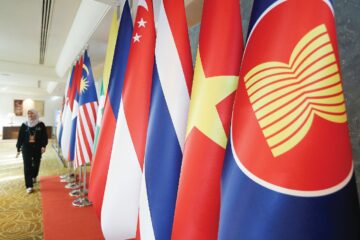
Senior officials from across ASEAN convened in Manila on 9 September 2026 to advance preparations for the 49th ASEAN Summit and Related Summits, while reviewing key issues surrounding ASEAN Community-building and the region’s expanding external relations.
The ASEAN Senior Officials’ Meeting (SOM) brought together ASEAN SOM Leaders or their representatives, alongside the Deputy Secretary-General of ASEAN for the ASEAN Political-Security Community. The discussions form part of a continuing series of high-level preparations ahead of the year-end leaders’ meetings under the Philippines’ 2026 ASEAN Chairship.
Preparations Advance for the 49th ASEAN Summit
A central focus of the Manila meeting was preparation for the 49th ASEAN Summit and Related Summits scheduled for November 2026.
According to ASEAN’s official calendar, the summit meetings are planned to take place in Metro Manila, bringing ASEAN leaders together with regional and international partners for one of the most significant diplomatic gatherings of the Philippine Chairship.
Senior Officials’ Meetings play an important preparatory role within ASEAN’s decision-making process. They provide Member States with an opportunity to coordinate positions, review proposed outcomes and address outstanding issues before matters progress to foreign ministers and ultimately ASEAN leaders.
The September meeting therefore represents an important stage in shaping the agenda and ensuring that priorities developed throughout 2026 can move towards concrete decisions and deliverables at the summit level.
ASEAN Community-Building Remains at the Centre
The meeting also addressed broader matters related to ASEAN Community-building, reflecting the organisation’s continuing effort to strengthen cooperation across its political-security, economic and socio-cultural pillars.
With Timor-Leste having joined ASEAN in October 2025, the organisation now comprises 11 Member States, making effective coordination and implementation increasingly important as ASEAN enters a new phase of regional integration.
Community-building goes beyond high-level diplomatic engagement. It encompasses efforts to deepen economic integration, strengthen regional resilience, improve connectivity and respond collectively to challenges affecting the region’s populations.
The work undertaken by senior officials helps connect these long-term objectives with the decisions eventually taken by ASEAN leaders.
External Relations Remain an Important Priority
ASEAN’s relationships with external partners were another key area of discussion in Manila.
The organisation maintains extensive dialogue and cooperation with countries and regional institutions around the world, covering areas ranging from trade and investment to political-security cooperation, connectivity, technology, energy and sustainable development.
Maintaining these relationships has become particularly important as Southeast Asia navigates increasing geopolitical competition and economic uncertainty.
ASEAN has consistently sought to preserve its central role in the regional architecture by maintaining open engagement with different partners rather than allowing Southeast Asia to become divided by major-power rivalry.
Strengthening ASEAN’s external relations therefore supports both practical cooperation and the wider principle of ASEAN centrality.
Manila Meeting Builds on a Year of ASEAN Consultations
The September meeting continues a series of ASEAN Senior Officials’ Meetings held throughout the Philippines’ 2026 Chairship.
Earlier meetings in Cebu in January, followed by gatherings in Manila in April and June, examined the Philippines’ Chairship priorities, ASEAN Community-building and preparations for major ministerial and leaders’ meetings.
The Philippines is chairing ASEAN in 2026 under the theme “Navigating Our Future, Together,” reflecting an emphasis on collective responses to regional challenges and closer cooperation among Member States.
The latest SOM therefore represents part of a continuous policy process rather than a standalone gathering, helping maintain momentum between ASEAN’s ministerial meetings and the upcoming November summit.
Wider Regional Architecture Also in Focus
The Manila consultations are taking place alongside other senior-level ASEAN mechanisms involving major regional partners.
ASEAN’s 2026 schedule includes meetings involving the ASEAN Plus Three framework with China, Japan and South Korea, as well as the East Asia Summit, reinforcing Manila’s role as a centre of regional diplomacy during the Philippine Chairship.
These mechanisms enable ASEAN to engage major economies and strategic partners while keeping ASEAN-led institutions at the centre of regional discussions.
Earlier ASEAN Plus Three consultations in Manila reviewed implementation of the APT Cooperation Work Plan 2023–2027, while East Asia Summit officials assessed progress under the EAS Plan of Action 2024–2028 and exchanged views on regional and international developments.
Together, these platforms illustrate the increasingly interconnected nature of ASEAN diplomacy.
From Senior-Level Coordination to Leaders’ Decisions
The effectiveness of the upcoming summit will depend significantly on the preparatory work undertaken in meetings such as the SOM.
ASEAN operates through consensus, meaning detailed negotiations and coordination are often necessary before regional positions can be finalised. Senior officials therefore play an essential role in narrowing differences, identifying areas of agreement and ensuring that proposals are sufficiently developed before being elevated to ministers and leaders.
This process is particularly important as ASEAN addresses an expanding range of issues — from geopolitical uncertainty and regional security to economic integration, digital transformation and resilience against external shocks.
Strong preparatory coordination can help ensure that summit declarations and commitments translate into practical initiatives rather than remaining broad political statements.
Looking Ahead to the November Summit
Attention will now increasingly turn towards the 49th ASEAN Summit and Related Summits, currently scheduled for November in Metro Manila.
The gathering will represent one of the final major milestones of the Philippines’ ASEAN Chairship before leadership of the organisation passes to Singapore for 2027.
For ASEAN, the coming months will provide an opportunity to consolidate progress made during 2026, strengthen cooperation with external partners and determine how the organisation responds collectively to a rapidly changing regional environment.
The September Senior Officials’ Meeting demonstrates that the groundwork for those discussions is already underway.
As ASEAN continues to expand its partnerships and deepen Community-building, effective coordination among its Member States will remain critical to ensuring that the organisation retains both regional relevance and practical capacity.
The Manila meeting therefore marks another important step towards the November summit — bringing ASEAN officials together to transform a year of consultations into priorities, agreements and regional outcomes for consideration by Southeast Asia’s leaders.