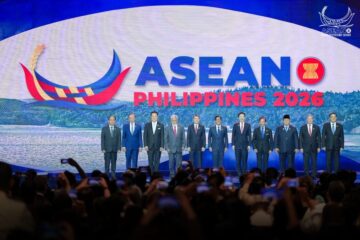
The Association of Southeast Asian Nations (ASEAN) is reaffirming its role as a driving force for regional economic integration, as member states signal a stronger push to expand participation in two landmark trade agreements — the Regional Comprehensive Economic Partnership (RCEP) and the Comprehensive and Progressive Agreement for Trans-Pacific Partnership (CPTPP).
The initiative was a central focus during the 31st ASEAN Economic Ministers’ Retreat, chaired by Malaysia’s Minister of Investment, Trade and Industry, Senator Tengku Datuk Seri Utama Zafrul Abdul Aziz. The retreat served as a pivotal platform for fostering a cohesive ASEAN position on economic cooperation, particularly in light of shifting global trade dynamics and geopolitical headwinds.
“The message from the ASEAN Economic Ministers is clear: we are united in strengthening our economic architecture, leveraging RCEP and CPTPP to unlock new growth areas, and future-proof our economies,” said Minister Zafrul. “This is part of ASEAN’s broader strategy to remain competitive, resilient, and open.”
Strategic Alignment with Global Trade Trends
The ministers reiterated their shared ambition to broaden ASEAN participation in both RCEP and CPTPP frameworks. Currently, all ASEAN countries are parties to the RCEP — the world’s largest free trade agreement — while only select member states, including Malaysia, Singapore, Brunei, and Vietnam, are signatories to the CPTPP.
The expansion efforts are aimed at harmonizing trade standards, deepening supply chain connectivity, and ensuring ASEAN’s continued relevance as a global manufacturing and innovation hub. In light of recent geopolitical and economic uncertainties, these trade pacts are seen as vital tools for reinforcing regional stability and economic resilience.
Inclusive Growth and Regional Prosperity
Minister Zafrul emphasized that ASEAN’s integration into these trade agreements must also be inclusive, ensuring that smaller economies within the bloc are supported through technical cooperation and capacity-building measures.
“ASEAN’s success lies in our unity and inclusivity. Our trade strategies must lift all members equally, providing equitable access to opportunities and resources,” he added.
The press statement also highlighted ASEAN’s work in strengthening the digital economy, sustainable development, and green growth as part of its trade and economic agenda.
Looking Ahead
As ASEAN prepares to commemorate its 60th anniversary in 2027, efforts like the expansion into RCEP and CPTPP are part of a broader, long-term vision to build a more integrated, innovative, and future-ready regional community.
The ASEAN Secretariat, in coordination with member states and external partners, will continue to facilitate dialogues and negotiations to advance this goal.