Sarawak is emerging as a pivotal force in Southeast Asia’s clean energy transformation, with experts highlighting its strategic role in the ASEAN Power Grid (APG) and its ambitious plan to triple renewable energy capacity to 15 gigawatts (GW) by 2035.
According to Arthur D. Little Southeast Asia partner Trung Ghi, Sarawak’s hydropower, solar, and hydrogen resources are uniquely positioned to displace fossil fuel generation across the region. “The 15GW target is ambitious but feasible with the right enablers,” Trung said, citing the state’s 2035 Strategic Plan as a blueprint for regional energy security and export growth.
Prime Minister Datuk Seri Anwar Ibrahim echoed this sentiment, stating that Sarawak could become Malaysia’s main energy hub and a cornerstone of ASEAN’s decarbonisation efforts.
Cross-Border Connectivity and Investment Momentum
Malaysia is currently exploring two transmission routes to export Sarawak’s clean energy:
- An overland route via Peninsular Malaysia
- A direct undersea cable to Singapore
Trung noted that whichever route secures financing and regulatory approvals first will likely proceed, with cost-efficiency and geopolitical alignment being key factors. “Direct access to Singapore’s premium market could offer higher commercial returns,” he added.
Regional Collaboration and Financing Framework
Despite ASEAN’s continued reliance on fossil fuels, the APG offers a long-term structural solution for emissions reduction. However, execution across multiple jurisdictions remains complex, involving:
- Land acquisition and environmental clearances
- Maritime regulations
- Grid code harmonisation
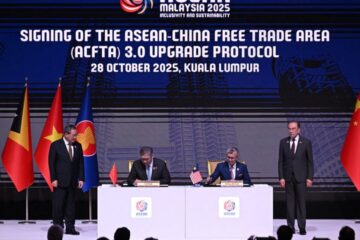
To address these challenges, the ASEAN Power Grid Finance Facility Framework, jointly developed by the Asian Development Bank (ADB) and the World Bank, is expected to launch at the ASEAN Summit in October 2025. The initiative aims to mobilize US$764 billion in infrastructure investment across the region.
Expert Insight
“Continued coordination among governments, regulators and industry players will be critical,” Trung emphasized. “Mobilising this level of capital will demand a stable regulatory environment and clear project pipelines.”