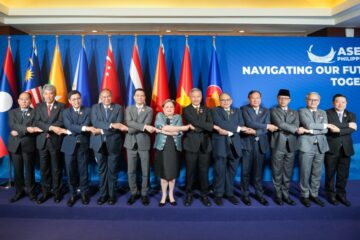
ASEAN governments are increasingly positioning nuclear energy as a key pillar in their long-term strategy to secure clean, sustainable, and stable energy for the region’s burgeoning economies. This renewed push reflects a growing urgency to decarbonize and meet soaring electricity demand amid climate change pressures.
Key Developments & Regional Momentum
- At the 15th Nuclear Energy Cooperation Sub-Sector Network (NEC-SSN) meeting in Kuala Lumpur (April 28–30, 2025), delegates agreed on integrating nuclear into the upcoming ASEAN Plan of Action for Energy Cooperation (APAEC) 2026–2030. PETRA, Malaysia’s energy ministry, also initiated cooperative dialogues with global bodies including the IAEA, Japan Atomic Energy Agency, and Korea Nuclear Security
- A transformative moment came on July 25, 2025, when IAEA Director General Rafael Mariano Grossi, speaking at the National University of Singapore, spotlighted Singapore as a potential leader in Small Modular Reactor (SMR) deployment due to its compact footprint, strong regulatory structure, and high energy demands
- Malaysia is rejuvenating its nuclear ambitions: a draft MoU toward the critical 123 Agreement with the United States is underway, potentially clearing legal and regulatory paths for civilian nuclear cooperation. The country is also scouting SMR technologies for remote areas and plans study visits to Russia to deepen its technical and governance capacity
- Indonesia reaffirmed its nuclear ambitions with a feasibility agreement via PLN Nusantara Power and ThorCon International (July 2025) to explore nuclear plant options in Bangka Belitung, targeting operations between 2032 and 2033 as part of its “NZE 2060” roadmap
- The Philippines continues its Long-Term Nuclear Energy Program (NEP), aiming for 1,200 MW of nuclear capacity by 2032 and up to 4,800 MW by 2050, relying heavily on SMR technology and potential revival of the Bataan plant under new US nuclear cooperation terms
- Vietnam revised its power development plan (PDP 8) to relaunch nuclear power, with initial nuclear capacity (4–6.4 GW) expected online between 2030 and 2035, and an additional 8 GW by 2050. The plan includes a sweeping $136.3 billion investment to boost overall capacity and strategically shrink coal reliance
Why Nuclear Now?: Clean, Reliable, Scalable
- ASEAN’s electricity demand is projected to triple by 2050 (from 1,200 TWh in 2022 to roughly 4,300 TWh)—a trajectory that emissions-heavy fossil fuels cannot sustainably support
- Nuclear, especially SMRs, offers a low-carbon, baseload alternative with improved safety, lower upfront costs, and flexible deployment. Global experts, including IEA leaders, see 2025 as a pivotal year for recommitting to nuclear as part of the energy transition
- That said, challenges persist: infrastructure gaps, skilled workforce shortages, waste management concerns, funding limitations, and geopolitical dependencies (notably on Russian suppliers) all require strategic coordination and investment
ASEAN Advantages: Cooperation, Frameworks, Future
- ASEAN’s long-standing networks—such as ASEANTOM and NEC-SSN—offer a unique collaborative foundation to harmonize regulatory structures, safety protocols, and public acceptance across the bloc
- The “Framing a Nuclear-Powered Future for ASEAN” report (May 2025) highlights how pooling resources, sharing standards, and building regional trust can reduce costs, boost efficiency, and enhance public confidence—all critical in a nuclear initiative
“As Southeast Asia accelerates toward a low-carbon future, nuclear energy has emerged not merely as a possibility—but as a practical option. Through pan-ASEAN collaboration, strong regulatory design, and inclusive stakeholder engagement, we can transform these discussions into functional, safe, and equitable energy solutions for generations to come.”
Key Highlights at a Glance
| Highlight | Detail |
|---|---|
| Regional Commitments | Integration into APAEC 2026–2030 and partnerships with IAEA, JAEA, Korea Nuclear Security |
| Country Initiatives | SMR feasibility in Singapore, nuclear restart in Malaysia, Indonesia’s Bangka plant plans, Philippines’ NEP, Vietnam’s multi-GW expansion |
| Strategic Drivers | Tripling electricity demand by 2050, climate targets, dependable baseload power |
| Key Challenges | Infrastructure, regulation, financing, workforce, waste, geopolitical dependencies |
| Regional Opportunity | Collaboration through ASEANTOM & NEC-SSN, shared frameworks, mutual capacity-building |