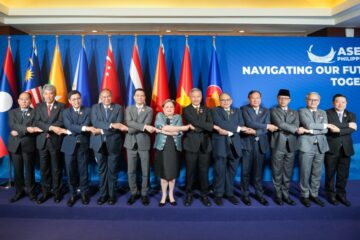
Malaysia stands poised to reap an estimated RM78 million in sales opportunities following Timor-Leste’s formal accession as the 11th member of ASEAN — a development expected to open new trade corridors, deepen economic integration, and strengthen bilateral commerce across the region. (NST Online)
On 26 October 2025, Timor-Leste was officially admitted into ASEAN during the 47th ASEAN Summit in Kuala Lumpur.
Malaysia — as the host and Chair for 2025 — played a leading role in this milestone, reaffirming its commitment to regional solidarity, inclusivity, and shared economic growth. (NST Online)
Key Opportunity: Export Potential & Market Expansion
- Analysis following the enlargement suggests that Malaysian exporters could capture up to RM78 million in potential sales as they explore Timor-Leste’s market — across sectors ranging from consumer goods, machinery, construction materials, food & beverage, to services.
- The integration paves the way for enhanced trade flows, supply-chain linkages, and new demand patterns within the expanding ASEAN internal market, offering Malaysian businesses first-mover advantage.
- This export potential aligns with the broader push for greater commerce under ASEAN’s economic pillar following the bloc’s expansion, signalling bullish prospects for bilateral and regional trade.
Strategic Implications for Malaysian and Regional Stakeholders
- For Malaysian businesses & SMEs: The news presents a timely window to diversify export destinations. Firms in manufacturing, consumer goods, construction, food & beverage, logistics and services are particularly well-positioned to benefit.
- For trade agencies & policymakers: There is an opportunity to fast-track export facilitation programs, trade missions, and technical cooperation to help domestic firms capitalise on new demand from Timor-Leste.
- For ASEAN integration agenda: The trade uptick reinforces the value of enlargement, strengthening intra-ASEAN commercial networks and deepening economic interdependence — thus boosting regional resilience and economic sustainability.
- For investors: The expanding internal market and rising cross-border commerce create signals for potential growth in logistics, distribution, manufacturing and services, possibly attracting new investments into Malaysia and the broader region.
Recommended Next Steps & Policy Recommendations
- Launch a Malaysia–Timor-Leste Export Acceleration Initiative: Provide SMEs with targeted support (market research, certification, compliance, trade promotion) to capitalise on the new export potential.
- Facilitate bilateral trade missions and business-to-business matching events to help exporters connect directly with Timor-Leste importers and distributors.
- Strengthen customs, logistics and regulatory alignment to streamline trade flows — leveraging ASEAN frameworks to reduce trade friction and lower cost barriers.
- Monitor and support supply-chain development: Encourage diverse sourcing and upstream value-addition to support sustainable trade growth between Malaysia and Timor-Leste.
- Promote public-private cooperation — including government trade agencies, industry associations, logistic providers — to build a coordinated push into the new market.
Quote
“Timor-Leste’s accession to ASEAN doesn’t just mark a geopolitical milestone — it unlocks tangible economic opportunities. Malaysian exporters are now ideally placed to extend their reach into a newly integrated regional market, supporting domestic growth and reinforcing ASEAN’s promise of a seamless internal economy.” — [Spokesperson, Malaysian Trade & Export Sector]
About the Enlargement & Trade Outlook
Timor-Leste’s formal admission into ASEAN completes decades-long accession efforts begun in 2011, and marks the first expansion of the bloc since 1999.
As ASEAN’s economic community continues to deepen integration, the widened internal market — now with 11 member states — offers renewed export, investment and cooperation potential across Southeast Asia.