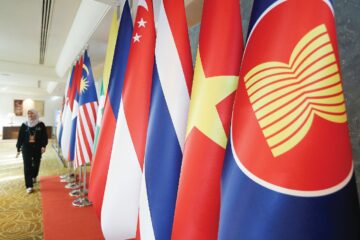
The Association of Southeast Asian Nations (ASEAN) has intensified efforts to advance its long-standing Five-Point Consensus (5PC) on Myanmar following a high-level convening of stakeholders in Manila under the leadership of the Philippines, current ASEAN Chair. This diplomatic initiative aims to reinvigorate regional cooperation to end violence and chart a peaceful, inclusive political roadmap for Myanmar.
In recent meetings organised in Manila, the Philippines brought together various political and ethnic groups from Myanmar to encourage dialogue on the 5PC — an ASEAN peace framework adopted in April 2021 that remains the bloc’s primary reference for addressing the crisis in Myanmar. (ASEAN Main Portal)
Reaffirming ASEAN’s Commitment to Peace and Stability
The Five-Point Consensus calls for:
- Immediate cessation of violence in Myanmar;
- Constructive dialogue among all parties to seek a peaceful solution;
- Appointment of an ASEAN Special Envoy to facilitate dialogue;
- ASEAN-led humanitarian assistance delivery;
- The Special Envoy’s engagement with all relevant stakeholders concerned.
Despite limited progress on implementation since its adoption, ASEAN leaders and foreign ministers have repeatedly reaffirmed their support for the 5PC and urged full compliance as a precondition for resolution before Myanmar holds national elections, emphasising that inclusive dialogue and cessation of violence must precede any credible political process. (Malay Mail)
The Philippine-hosted stakeholder gathering brought these objectives into sharper focus by encouraging broad engagement around the 5PC and reinforcing ASEAN’s intention to maintain momentum in diplomatic engagement amid continued conflict and humanitarian challenges in Myanmar.
Philippines’ Leadership in Regional Diplomacy
Under its ASEAN Chairmanship, the Philippines has championed efforts to:
- Facilitate inclusive consultations with diverse Myanmar stakeholders;
- Support ASEAN’s Special Envoy in building trust and exploring avenues for dialogue;
- Strengthen ASEAN coordination in addressing violence, humanitarian needs and conflict resolution strategies.
These efforts build on ASEAN’s Leaders’ Review and Decision on the Implementation of the Five-Point Consensus, which reaffirmed ASEAN’s concern over violence in Myanmar and called for concrete action to halt indiscriminate attacks, enhance humanitarian access, and create conducive conditions for future national dialogue. (ASEAN Main Portal)
While ASEAN continues to call for implementation of the 5PC in its entirety, member states have also stressed that the crisis must not hinder broader regional cooperation, and that ASEAN’s collective approach should remain anchored in consensus, inclusivity and respect for national ownership. (Malay Mail)
Regional and International Context
The renewed emphasis on the Five-Point Consensus comes amid ongoing concerns over political developments in Myanmar, including recent elections that ASEAN collectively chose not to endorse due to concerns about inclusivity and credibility. (AP News)
ASEAN foreign ministers and regional partners continue to explore ways to enhance the effectiveness of the 5PC mechanism while promoting humanitarian assistance, de-escalation of violence and steps toward inclusive political engagement involving both internal and external stakeholders.
Quote
“ASEAN remains steadfast in its commitment to the Five-Point Consensus and its objectives of restoring peace, stability and inclusive dialogue for the people of Myanmar. The Philippines’ convening of Myanmar stakeholders reflects our collective determination to keep the 5PC at the centre of the regional response and to uphold ASEAN’s role as a constructive platform for peace.”
— ASEAN Chair Representative
About the Five-Point Consensus
Originally adopted in April 2021, the ASEAN Five-Point Consensus is ASEAN’s framework for addressing the Myanmar crisis through peaceful means, prioritising cessation of violence, facilitation of dialogue, humanitarian aid and inclusive engagement. ASEAN leaders have regularly reviewed progress on implementation and continue to advocate for sustained engagement and coordination to achieve a durable, Myanmar-owned and led political resolution. (Malay Mail)
I