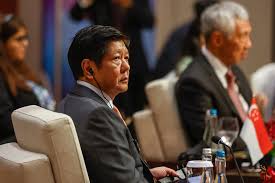
The Association of Southeast Asian Nations (ASEAN) remains a highly investable destination for foreign capital, yet stronger regional policy coordination and implementation consistency are critical to sustaining investor confidence and foreign direct investment (FDI) flows, according to Tan Sri Soh Thian Lai, Chairman of the ASEAN Manufacturing Network (AMN). (The Star)
Delivering a statement following a recent ASEAN Supply Chain Council (ASCC) meeting in Kuala Lumpur, Soh — who also serves as President of the Federation of Malaysian Manufacturing (FMM) — highlighted that although ASEAN continues to attract robust investment interest, recent data show downward pressures that require strategic regional action. (The Star)
FDI Trends Highlight Challenges and Opportunities
Data from the United Nations Economic and Social Commission for Asia and the Pacific (UNESCAP) show that greenfield FDI into ASEAN declined by 17% in the first three quarters of 2025, dropping from US$89.5 billion in the same period of 2024 to US$74.4 billion in 2025. (The Star)
Despite the decline, ASEAN still accounted for 29% of greenfield FDI announcements in the Asia Pacific region in 2025, and US$39.8 billion in intra-regional greenfield investment pledges, equivalent to 36% of total regional greenfield investments, demonstrating continued confidence in the region’s long-term economic prospects. (The Star)
Recent ASEAN Investment Reports further underline the bloc’s resilience in attracting FDI, with total inflows rising even amid global headwinds, and reaffirm ASEAN’s status as a key global destination for investment amid shifting global investment patterns. (ASEAN Main Portal)
Policy Coordination: The Priority for Sustained Growth
Soh told stakeholders that ASEAN’s ability to remain competitive depends on how well the region functions as an integrated production and trade ecosystem. He emphasised that persistent cost, time and regulatory frictions continue to hinder cross-border trade and weaken regional value chain linkages — particularly as supply chains face higher volatility, rising compliance demands and tighter delivery expectations. (The Star)
To address these challenges, the ASCC under Soh’s leadership reviewed priority action areas for 2026, with practical measures identified in key sectors such as food and beverages and semiconductors — both critical components of ASEAN’s industrial and export ecosystem. (The Star)
Priority Areas for Action
1. Food and Beverage Sector
- ASEAN still sees limited intra-regional trade in food and beverage products — only about 23–24% occurs within ASEAN — underscoring opportunities for policy reforms that ease market entry and scale-up for micro, small and medium enterprises (MSMEs). (The Star)
2. Semiconductor and High-Value Supply Chains
- Strengthening resilience in high-value and time-sensitive supply chains requires improved border predictability, reduced operational disruptions and support for talent mobility — all of which are essential for ASEAN’s role in global production networks. (The Star)
Soh said these sectoral insights and private-sector recommendations will be consolidated and presented to ASEAN Economic Ministers and Leaders through the ASEAN Business Advisory Council (ASEAN-BAC) to support evidence-based policymaking and regional competitiveness enhancements. (The Star)
Focus on Digital Trade and Supply Chain Visibility
Soh also underlined several cross-cutting measures where ASEAN can strengthen its investment environment, including:
- Accelerating digital trade facilitation
- Improving supply chain visibility
- Enabling trusted cross-border data exchange
These measures are expected to reduce friction in regional trade and investment, making ASEAN a more seamless and attractive destination for global capital and production networks. (The Star)
Quote
“ASEAN’s ability to compete and attract investment will increasingly depend on how well the region functions as an integrated production and trade ecosystem. Policy coordination, regulatory coherence and commitment to implementation across member states are crucial to sustaining foreign direct investment and deepening supply chain integration.”
— Tan Sri Soh Thian Lai, Chairman, ASEAN Manufacturing Network (AMN). (The Star)
About the ASEAN Supply Chain Council (ASCC)
The ASEAN Supply Chain Council is a business-government platform that brings together private-sector associations, investment stakeholders and ASEAN institutions to identify and advocate practical policy reforms to strengthen regional supply chains, investment performance and competitiveness across the bloc’s priority economic sectors. (The Star)
Regional Investment Outlook
ASEAN’s investment landscape remains robust, with the region maintaining its position as a top FDI destination globally despite challenges in 2025 — underscored by resilient inflows and its pivotal role in global supply chains. To build on this momentum, ASEAN continues to pursue collaborative initiatives such as the ASEAN Regional FDI Investment Promotion Action Plan 2025–2030, which encourages coordinated promotion of priority sectors and unified investment outreach across member states. (ASEAN Main Portal)