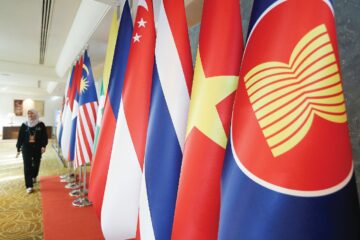
Foreign ministers from the Association of Southeast Asian Nations (ASEAN) opened their annual ministerial retreat with a focus on pressing geopolitical and security challenges facing the region, including the longstanding Thailand–Cambodia border dispute, escalating tensions in the South China Sea, and the ongoing crisis in Myanmar.
The informal retreat — the first major foreign policy gathering of the year under the Philippines’ ASEAN Chairmanship for 2026 — brought together senior diplomats for strategic dialogue on ASEAN’s priorities and regional diplomatic coordination. (nationthailand)
Setting ASEAN’s Security Priorities for 2026
In her opening remarks, Philippine Foreign Minister Ma. Theresa Lazaro emphasised that the current security landscape in Southeast Asia is becoming increasingly complex and interconnected. She underscored the need for ASEAN to uphold a rules-based approach, rely on restraint and dialogue, and draw upon international law to address shared challenges. (nationthailand)
At the heart of the retreat agenda is the unresolved Thailand–Cambodia border dispute, which has periodically flared into violence over contested territories near key historical sites and frontier areas. Recent efforts by ASEAN to encourage de-escalation — including calls for mutual restraint, ceasefires and deployment of observer mechanisms — reflect the bloc’s commitment to peaceful resolution. (nationthailand)
The ministers also addressed:
- South China Sea tensions, where ASEAN continues to pursue completion of a Code of Conduct model to manage overlapping maritime claims peacefully and enhance freedom of navigation. (nationthailand)
- Myanmar’s deepening internal conflict, which remains a central concern for ASEAN diplomats seeking inclusive dialogue and sustained humanitarian support amid ongoing violence. (nationthailand)
Border Conflict: ASEAN’s Diplomatic Imperative
The Cambodia–Thailand border conflict, which has periodically erupted into clashes with significant civilian displacement and infrastructure damage, continues to test ASEAN’s conflict-management architecture. In late 2025, ASEAN foreign ministers held a special session calling for restraint and a mutual ceasefire, with mechanisms including an ASEAN observer team to monitor de-escalation efforts — a testament to the bloc’s commitment to reducing tensions through diplomatic engagement. (nationthailand)
The retreat provided an opportunity for ministers to align perspectives, share updates on developments, and set diplomatic priorities for 2026, seeking to harmonise ASEAN’s collective response to these multifaceted challenges.
Quote
“This retreat reflects ASEAN’s dedication to addressing not only immediate security concerns but also long-term stability through cooperation, international law and inclusive dialogue. By confronting border disputes, maritime tensions and humanitarian crises together, ASEAN strengthens its role as a regional anchor for peace and resilience.”
— ASEAN Foreign Ministers’ Retreat Delegation Statement (Cebu, 29 January 2026)
Notes to Editors:
- The ASEAN Foreign Ministers’ Retreat is an annual informal forum that sets diplomatic priorities and reinforces regional coordination under the rotating ASEAN Chairmanship. (nationthailand)
- The Thailand–Cambodia border dispute has been an ongoing regional security issue, with ASEAN previously issuing calls for immediate ceasefire, restraint and diplomatic engagement. (ASEAN)
- ASEAN continues efforts to advance a Code of Conduct for the South China Sea and to support peaceful dialogue and humanitarian action in Myanmar. (nationthailand)