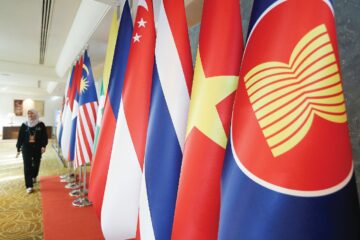
ASEAN economies including Malaysia, Thailand and Vietnam are navigating a rapidly evolving global trade environment as the United States intensifies the use of tariff measures and trade probes linked to supply chain transparency and labour standards. (CNA)
The developments signal a significant shift in global trade dynamics, with Southeast Asia increasingly positioned at the centre of strategic economic competition and supply chain realignment.
Rising US Tariff Measures Reshape Regional Trade
According to recent analysis, Washington’s latest trade probes are viewed as more comprehensive and enforceable than earlier tariff policies, providing greater legal certainty and broader scope for action. (CNA)
These measures are part of a wider strategy to:
- Strengthen oversight of global supply chains
- Address concerns over forced labour practices
- Reduce reliance on transshipment routes that may bypass existing trade restrictions
As a result, ASEAN exporters are facing heightened scrutiny and compliance requirements, particularly in sectors such as manufacturing, electronics and textiles.
Trade Deals Introduce New Compliance Frameworks
In response, several ASEAN countries have engaged in new trade agreements and frameworks with the United States, incorporating:
- Tariff reciprocity mechanisms
- Commitments to labour rights and environmental standards
- Enhanced supply chain transparency and traceability systems (www.hoganlovells.com)
These agreements — covering Malaysia, Cambodia, Thailand and Vietnam — account for a significant portion of US-ASEAN trade and are reshaping how goods move across borders. (www.hoganlovells.com)
Notably, the integration of tariff incentives with labour enforcement measures represents a new model of trade governance, where compliance with international standards directly influences market access.
Forced Labour Concerns Drive Policy Shifts
A central focus of the new trade landscape is the elimination of forced labour in global supply chains. Emerging trade frameworks are introducing:
- Joint audits of production systems
- Real-time data sharing between customs authorities
- Stricter verification of product origin and labour conditions (Diplomatic Courier)
These mechanisms aim to prevent the rerouting of goods through ASEAN markets to evade trade restrictions, reinforcing the region’s role as a frontline participant in global supply chain governance.
Challenges and Opportunities for ASEAN
While the tightening of trade rules presents short-term challenges, it also creates strategic opportunities for ASEAN economies:
Challenges:
- Increased compliance costs for exporters
- Pressure on industries reliant on complex regional supply chains
- Need for stronger regulatory coordination across member states
Opportunities:
- Positioning ASEAN as a trusted, transparent manufacturing hub
- Attracting investment through “friendshoring” strategies
- Accelerating upgrades in digital trade systems and traceability infrastructure
The evolving environment reinforces ASEAN’s importance as a critical node in global trade, particularly as companies diversify supply chains beyond traditional manufacturing centres.
Quote
“ASEAN stands at a pivotal moment in global trade. By strengthening transparency, labour standards and policy coordination, the region can transform current challenges into long-term advantages — positioning itself as a trusted partner in global supply chains.”
Looking Ahead
As geopolitical tensions and trade policies continue to reshape global commerce, ASEAN’s response will be crucial in determining its future role in international trade.
With proactive engagement, policy alignment and investment in compliance infrastructure, ASEAN economies are well positioned to adapt, compete and lead in a new era of rules-based global trade — balancing economic growth with responsible and sustainable practices.