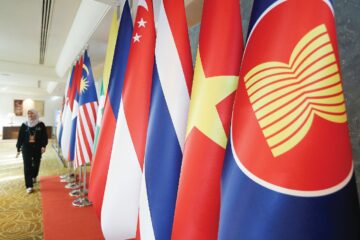
ASEAN is entering a new phase of accelerated economic growth, underpinned by rising regional integration, strong foreign direct investment (FDI) inflows and evolving demographic and technological trends, according to recent insights highlighted by leading financial institutions. (The Edge Singapore)
As global supply chains shift and geopolitical dynamics evolve, Southeast Asia is increasingly positioned as a key engine of global growth, with projections indicating the region could outpace major economies in GDP and investment expansion over the next decade. (DBS Bank)
A Decade of Opportunity for ASEAN Economies
Economic forecasts suggest that ASEAN’s leading economies — Indonesia, Malaysia, the Philippines, Singapore, Thailand and Vietnam — could achieve average annual GDP growth of around 5% or higher, with several markets exceeding 6%. (The Business Times)
This growth trajectory is supported by:
- Expanding middle-class populations and rising consumer demand
- Increasing urbanisation and digital adoption
- Strong inflows of foreign direct investment driven by supply chain diversification
- Continued trade openness and regional connectivity (The Edge Singapore)
For the first time in a decade, ASEAN has also attracted more FDI than China, reflecting growing investor confidence in the region’s long-term potential. (DBS Bank)
Key Growth Drivers Shaping ASEAN’s Future
ASEAN’s next decade of growth will be shaped by several transformative forces:
1. Regional Integration and Connectivity
Deeper economic integration across ASEAN is enhancing cross-border trade, financial flows and business expansion, positioning the region as a unified economic bloc.
2. Digital Transformation and Innovation
Rapid adoption of digital technologies — including AI, fintech and e-commerce — is improving productivity and unlocking new economic sectors.
3. Demographic Advantage
With a young and growing population in key markets such as Indonesia and the Philippines, ASEAN benefits from a dynamic workforce and expanding consumer base. (AMRO Asia)
4. Supply Chain Realignment
Global “China+1” strategies are redirecting manufacturing and investment into ASEAN, strengthening its role in global value chains.
Rising Global Economic Significance
ASEAN is projected to become the world’s fourth-largest economic bloc by 2030, with GDP potentially reaching US$5.8 trillion, further cementing its position as a major global growth hub. (The Edge Singapore)
Trade flows across the region are also expected to expand significantly, supported by enhanced infrastructure, logistics networks and regional cooperation frameworks.
Challenges to Address for Sustained Growth
Despite strong fundamentals, ASEAN faces several challenges that will shape its long-term trajectory:
- Infrastructure gaps requiring large-scale investment
- Digital divide and skills shortages in emerging sectors
- Climate risks and sustainability pressures
- Fiscal constraints and rising public debt levels (AMRO Asia)
Addressing these challenges will be critical to ensuring that growth remains inclusive, resilient and sustainable.
Quote
“ASEAN is entering a defining decade. With strong fundamentals, rising connectivity and growing investor confidence, the region is well positioned to accelerate growth and emerge as a central pillar of the global economy.”
Looking Ahead
As ASEAN transitions into its next phase of development, the focus will be on balancing rapid economic expansion with sustainability, inclusivity and innovation.
With continued policy coordination, investment in infrastructure and digital capabilities, and deeper regional integration, ASEAN is poised to unlock its full potential and shape the future of global growth in the decade ahead.