Lawmakers from across Southeast Asia have concluded a week-long visit to China’s Hainan province, gaining first-hand insights into free-trade development, agricultural innovation, environmental sustainability, digital growth and grassroots governance as China and ASEAN strengthen legislative and people-to-people cooperation.
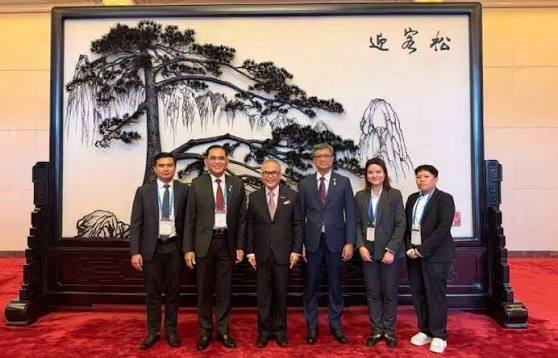
The visit formed part of the Third ASEAN Parliamentarians Seminar, which brought together representatives from Brunei, Cambodia, Laos, Malaysia, Myanmar, the Philippines, Singapore, Thailand and Timor-Leste, alongside officials from the ASEAN Inter-Parliamentary Assembly Secretariat.
Over three days of site inspections across Hainan, delegates visited Haikou, Wenchang and Qionghai, examining developments ranging from free-trade port industries and fishery innovation to rural communities, cultural heritage and a near-zero-carbon demonstration zone.
Hainan Emerges as a Bridge Between China and ASEAN
The seminar comes as China and ASEAN mark the fifth anniversary of their Comprehensive Strategic Partnership, with Hainan becoming increasingly relevant to expanding regional trade and investment connectivity.
Located close to Southeast Asia and supported by the development of the Hainan Free Trade Port, the island has the potential to serve as an increasingly important commercial link between Chinese and ASEAN markets.
For Southeast Asian businesses, stronger connections with Hainan could create opportunities spanning investment, logistics, agriculture, tourism, technology and the digital economy.
The lawmakers’ visit consequently extended beyond parliamentary dialogue, offering participants direct exposure to development models that could potentially inform economic and policy initiatives within their respective countries.
Malaysia Sees Lessons Across Multiple Industries
Malaysian Senator Jufitri bin Joha highlighted the broad range of sectors covered during the visit, including agriculture, technology, aerospace and tourism.
He described the programme as highly educational and said Hainan could provide useful lessons not only for its own development but also for neighbouring ASEAN countries.
The observation reflects a wider opportunity for ASEAN economies to study how Hainan combines industrial development with technology, tourism and environmental priorities.
Rather than simply replicating Hainan’s policies, Southeast Asian economies could identify approaches relevant to their individual development needs while strengthening direct cooperation with Chinese institutions and businesses.
Singapore Companies See Investment Potential
The visit also highlighted potential commercial opportunities for ASEAN companies.
Singapore Member of Parliament Gerald Giam Yean Song pointed to opportunities for Singapore businesses to invest in Hainan while learning from China’s development experience.
Greater private-sector engagement could complement existing government and legislative cooperation, particularly as businesses seek new opportunities within the increasingly interconnected China–ASEAN economic landscape.
Hainan’s free-trade ambitions could provide another platform through which Southeast Asian companies engage with the wider Chinese market, while Chinese enterprises may similarly use the province as a base for strengthening connections with ASEAN.
Agricultural Innovation Offers Opportunities for Cooperation
Agriculture emerged as another important area of interest during the programme.
Delegates examined fishery and aquaculture innovation, providing an opportunity to explore how technology can improve agricultural productivity and sustainability.
Laos MP adviser Lamphong Volady identified aquaculture technology as an area where Chinese experience could provide useful lessons for Laos, while also emphasising opportunities for greater exchanges among students and researchers.
Agricultural cooperation has considerable relevance to ASEAN because food security is increasingly connected with climate resilience, technology and supply-chain stability.
Knowledge-sharing in areas such as aquaculture, agricultural technology and sustainable production could therefore contribute to both economic development and regional food resilience.
Green Development Takes Centre Stage
Environmental protection was another major theme of the seminar.
The lawmakers’ itinerary included a visit to a near-zero-carbon demonstration zone, allowing delegates to observe how environmental objectives can be incorporated into development planning.
This carries particular relevance for ASEAN as member states seek to balance rapid economic growth with climate commitments, renewable-energy development and environmental protection.
Southeast Asia is among the regions particularly exposed to climate-related challenges, including extreme weather, rising temperatures and pressure on natural ecosystems.
Practical exchanges involving green infrastructure, sustainable communities and low-carbon development could therefore become an increasingly valuable component of China–ASEAN cooperation.
Digital Economy Creates Another Area for Collaboration
The digital economy also featured prominently in discussions among participating lawmakers.
Both China and ASEAN are experiencing rapid digital transformation, creating opportunities for cooperation in areas ranging from e-commerce and smart infrastructure to digital services and emerging technologies.
For ASEAN, digitalisation is increasingly central to improving productivity, expanding SME access to international markets and strengthening regional economic integration.
Closer engagement with Chinese technology ecosystems could provide new investment and knowledge-sharing opportunities, while ASEAN’s growing consumer markets and digital economy create significant commercial potential for Chinese companies.
The challenge will be ensuring that digital cooperation contributes to inclusive growth, local capability development and mutually beneficial economic outcomes.
Legislative Dialogue Supports Regional Stability
Beyond economic cooperation, the seminar highlighted the role parliamentarians can play in strengthening dialogue, mutual understanding and regional stability.
Philippine Congressman Paolo Marcoleta emphasised the importance of lawmakers interacting, exchanging information and maintaining dialogue to support a peaceful environment across Asia.
Such exchanges can complement government-to-government diplomacy by creating additional channels through which policymakers understand one another’s priorities and development experiences.
This becomes increasingly important as ASEAN and China manage an extensive relationship encompassing trade, investment, security, technology, infrastructure and people-to-people connections.
Belt and Road Cooperation Remains Part of the Agenda
The Belt and Road Initiative was also among the major topics addressed during the seminar, alongside legislative challenges, environmental protection, agricultural modernisation and digital economic development.
For ASEAN, connectivity remains an important foundation for long-term economic integration.
Transport infrastructure, ports, logistics networks and digital connectivity can improve the movement of goods and services while helping businesses participate more effectively in regional and global supply chains.
Hainan’s growing role within regional trade could therefore complement wider connectivity initiatives linking China with Southeast Asian markets.
Strengthening People-to-People Connections
The programme also demonstrated that China–ASEAN relations extend beyond government and commercial engagement.
Educational and research exchanges were highlighted as areas where stronger cooperation could generate long-term benefits.
Lamphong, for example, called for greater exchanges between Chinese and Lao students and researchers, allowing both sides to share knowledge and development experiences.
Expanding academic, professional and youth exchanges can help strengthen relationships at a societal level while supporting the development of skills needed for emerging industries.
These connections could become increasingly important as China and ASEAN pursue cooperation in technology-intensive sectors requiring specialised talent and cross-border research.
Looking Ahead
The Third ASEAN Parliamentarians Seminar illustrates the increasingly multidimensional nature of China–ASEAN cooperation.
From free-trade development and agricultural technology to environmental sustainability, digitalisation and legislative dialogue, the visit provided ASEAN lawmakers with direct exposure to Hainan’s evolving development model.
For Hainan, deeper engagement with ASEAN could strengthen its position as a commercial and investment gateway between China and Southeast Asia. For ASEAN economies, the relationship provides opportunities to attract investment, exchange knowledge and explore practical development models across a wide range of sectors.
As China and ASEAN mark five years of their Comprehensive Strategic Partnership, the next phase of cooperation will increasingly depend on turning high-level relationships into practical projects that create measurable benefits for businesses and communities.
Continued exchanges between lawmakers, businesses, researchers and communities could help build a more connected, innovative and sustainable China–ASEAN relationship, while creating new opportunities for shared development across the wider Asian region.