
The Philippines is calling for greater harmonisation of halal certification standards across ASEAN, a move that could reduce trade barriers, strengthen consumer confidence and help Southeast Asian businesses gain wider access to rapidly expanding halal markets in the Middle East and beyond.
The initiative comes during the Philippines’ 2026 ASEAN Chairship, with the country actively participating in regional discussions aimed at developing a more consistent approach to halal food certification and mutual recognition among ASEAN Member States.
According to the Philippine Department of Trade and Industry (DTI), ASEAN countries generally observe the same fundamental halal principles based on Islamic law, but procedures for certification, accreditation, institutional oversight and recognition continue to differ between national markets.
Common Standards Could Make ASEAN Halal Trade Easier
The Philippines is advocating for a framework that would improve consistency while respecting the individual halal authorities and regulatory systems of ASEAN Member States.
A more harmonised approach could make it easier for halal-certified businesses to expand across borders by reducing duplicated certification processes and improving recognition between markets.
The DTI said greater harmonisation could help lower compliance costs, simplify market entry, increase consumer confidence and strengthen intra-ASEAN trade.
For small and medium-sized enterprises in particular, reducing unnecessary differences between certification systems could significantly improve their ability to participate in regional halal supply chains.
ASEAN itself has long identified harmonisation as an important trade-facilitation objective. Its Working Group on Halal Food provides a regional mechanism for cooperation on halal standards, certification, accreditation, capacity-building and the exchange of best practices.
Earlier ASEAN plans also specifically identified the harmonisation of accreditation, inspection and certification requirements as a way of enabling greater recognition of equivalence across Member States.
ASEAN Guidelines on Halal Food Under Discussion
Momentum towards greater regional alignment accelerated as the Philippines hosted an ASEAN Working Group on Halal Food meeting in July 2026, where common halal standards formed part of the discussions.
ASEAN Member States are currently deliberating ASEAN Guidelines on Halal Food, aimed at promoting a more harmonised regional approach. Any future arrangement will remain subject to consensus among ASEAN members, according to the Philippine DTI.
The process builds upon ASEAN’s existing cooperation in halal food. Regional mechanisms already facilitate the exchange of information on national certification and accreditation systems while supporting the development of common guidelines and capacity-building programmes.
The challenge will be finding sufficient common ground while respecting differences in national laws, religious authorities and established certification structures.
ASEAN Holds a Significant Position in the Global Halal Economy
The commercial opportunity behind greater harmonisation is substantial.
Three ASEAN members — Indonesia, Malaysia and Brunei Darussalam — are Muslim-majority countries. Together, Muslim-majority markets account for around 45 per cent of ASEAN’s population of more than 680 million people, according to the report.
The Philippines itself, while predominantly Catholic, has a sizeable Muslim population estimated at about 10 per cent of its nearly 120 million people.
This gives ASEAN both a significant domestic halal consumer base and strong commercial connections with Muslim markets internationally.
Globally, Muslim consumer spending on halal food reached approximately US$1.53 trillion in 2024 and is projected to rise to around US$2.06 trillion by 2029, according to figures from the State of the Global Islamic Economy report cited by Arab News.
A stronger regional certification environment could help ASEAN producers capture a larger share of that expanding market.
Opportunities Extend Beyond Muslim-Majority Markets
Demand for halal certification is also increasingly extending beyond traditionally Muslim-majority markets.
Companies are seeking certification not only to reach Muslim consumers domestically, but also to access markets across ASEAN, the Middle East and countries within the Organisation of Islamic Cooperation (OIC).
At the same time, production requirements associated with halal certification — including controls surrounding ingredients, handling processes, hygiene and traceability — can strengthen perceptions of product quality and manufacturing discipline among a broader group of consumers.
This creates opportunities extending beyond food into sectors such as cosmetics, personal care, pharmaceuticals, logistics, tourism and hospitality, where halal-related standards increasingly form part of wider international business strategies.
Greater Potential for ASEAN SMEs
A common regional approach could be particularly valuable for ASEAN’s micro, small and medium-sized enterprises.
Businesses seeking to sell the same halal product in several countries may currently need to understand different national procedures and recognition arrangements.
Simplifying those processes could allow more SMEs to pursue regional expansion while directing resources towards product development, manufacturing and marketing.
In the Philippines, the DTI has already expanded halal certification support for MSMEs as part of efforts to improve export competitiveness and participation in ASEAN markets.
Improved regional recognition could amplify those programmes by giving certified businesses clearer routes into neighbouring markets.
Halal Harmonisation Supports ASEAN Economic Integration
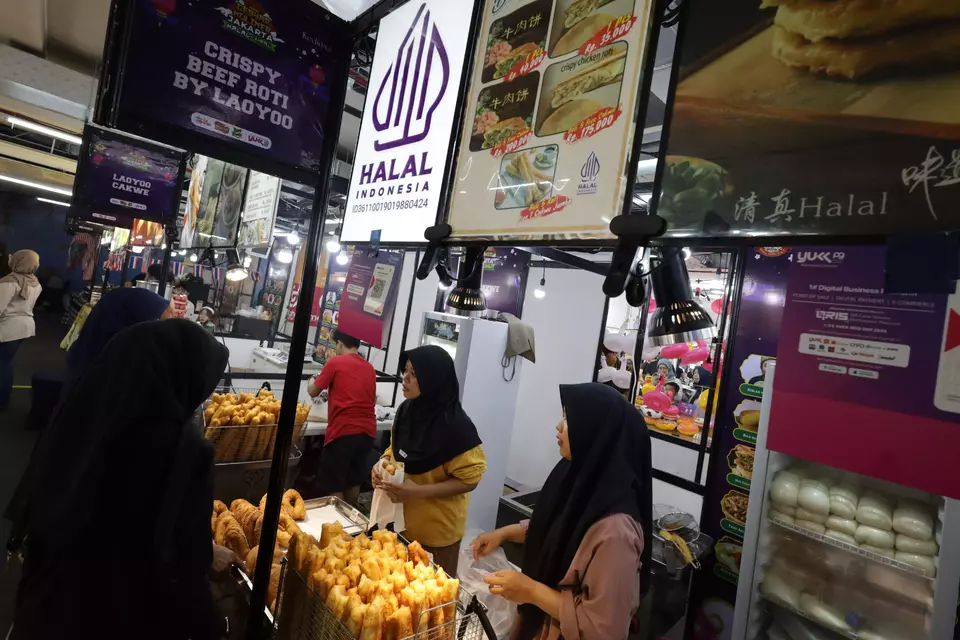
The push also fits within ASEAN’s wider goal of reducing technical barriers to trade.
Despite substantial progress in lowering tariffs, different national standards and conformity requirements can continue to make cross-border commerce more complicated and expensive. ASEAN identifies standards harmonisation and mutual recognition as important tools for reducing these barriers and advancing economic integration.
Halal certification represents a particularly significant area because consumer trust depends heavily on the integrity and credibility of certification systems.
Greater compatibility between ASEAN frameworks could therefore support not only commercial efficiency but also confidence that certified products consistently meet recognised halal requirements.
Positioning ASEAN as a Global Halal Hub
Closer coordination could ultimately strengthen ASEAN’s collective position within the international halal economy.
Malaysia, Indonesia and Brunei already possess established halal ecosystems, while countries including the Philippines, Thailand and Singapore have increasingly developed halal products and services for domestic and export markets.
Combining these capabilities through stronger regional cooperation could create a more interconnected ecosystem encompassing food manufacturing, agriculture, logistics, tourism, finance and other halal-related industries.
Instead of ASEAN businesses approaching major international halal markets solely through individual national systems, stronger mutual recognition could eventually give the region greater collective visibility and competitiveness.
Looking Ahead
The Philippines’ proposal highlights how standards cooperation can become an important part of ASEAN’s next phase of economic integration.
The objective is not necessarily to replace national certification authorities with a single ASEAN system. Rather, the more practical opportunity is to develop common guidelines, greater compatibility and stronger mutual recognition while preserving each country’s legitimate religious and regulatory requirements.
If ASEAN can achieve that balance, businesses could face fewer barriers when expanding regionally, consumers could benefit from greater consistency, and Southeast Asian producers could become better positioned to compete in a global halal market expected to continue expanding strongly.
As the Philippines leads ASEAN in 2026, progress on halal certification could therefore carry significance well beyond food regulation. It represents an opportunity to turn Southeast Asia’s diverse halal capabilities into a more connected regional industry — strengthening intra-ASEAN commerce while opening wider pathways to Muslim consumer markets worldwide.