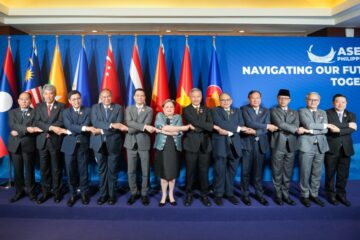
KUALA LUMPUR — June 2026 — As global economic power continues to shift eastward, ASEAN is emerging as a potential catalyst for a more balanced and diversified international financial system, supported by its growing economic influence, deepening regional integration and expanding role in global trade and investment.
Against a backdrop of geopolitical uncertainty, evolving trade patterns and increasing calls for reform of global financial governance, experts are highlighting ASEAN’s unique position to help shape a more resilient and inclusive financial architecture for the decades ahead.
A Region of Rising Economic Significance
ASEAN has evolved into one of the world’s most dynamic economic regions, supported by a combined population of more than 680 million people and a rapidly expanding middle class. The bloc continues to attract substantial foreign direct investment while strengthening its position as a key manufacturing, trade and digital economy hub.
The region’s economic transformation has been further reinforced by deeper intra-regional integration, growing consumer demand and increasingly interconnected production networks.
Today, ASEAN stands at the intersection of major global economic corridors, making it an increasingly important voice in discussions surrounding international finance, development and economic governance.
Rebalancing a Changing Global Financial Landscape
The international financial system has historically been concentrated around a small number of major economies and reserve currencies. However, ongoing shifts in global economic activity are creating momentum for a more diversified framework that better reflects the realities of the modern world economy.
ASEAN’s growing economic weight provides an opportunity to contribute to:
- Greater financial diversification and resilience
- Expanded use of regional financial mechanisms
- Stronger cross-border investment connectivity
- More inclusive participation in global financial decision-making
- Enhanced financial stability through regional cooperation
As emerging economies contribute a larger share of global growth, calls for a more representative financial order are expected to intensify.
Strengthening Regional Financial Integration
ASEAN’s long-term vision places significant emphasis on financial integration, inclusion and connectivity.
Under the ASEAN Economic Community Strategic Plan 2026–2030, member states have committed to advancing deeper financial integration and improving access to financial services throughout the region. Key priorities include:
- Enhancing regional payment connectivity
- Expanding capital market development
- Strengthening financial inclusion
- Improving cross-border financial cooperation
- Supporting sustainable and digital finance initiatives
These efforts are designed to create a more efficient and competitive regional financial ecosystem capable of supporting long-term economic growth.
Building Resilience Through Regional Cooperation
Recent global events have highlighted the importance of financial resilience and policy flexibility. The ASEAN+3 Regional Economic Outlook 2026 notes that while the region faces significant external uncertainties, it continues to benefit from strong domestic demand, growing regional linkages and relatively sound macroeconomic fundamentals.
The report further highlights how ASEAN+3 economies have become increasingly interconnected over the past two decades, creating a more regionally anchored economic structure capable of withstanding external shocks more effectively than in previous eras.
This growing interconnectedness is strengthening ASEAN’s ability to coordinate responses to global challenges while preserving economic stability.
A Strategic Opportunity for ASEAN Leadership
The current period of global transition presents ASEAN with a unique opportunity to expand its influence beyond traditional trade and investment roles.
By promoting:
- Rules-based economic cooperation
- Sustainable development financing
- Digital financial innovation
- Cross-border payment interoperability
- Regional investment facilitation
ASEAN can help shape a financial system that is more reflective of contemporary economic realities and better equipped to serve both developed and emerging economies.
Supporting ASEAN Vision 2045
The aspiration aligns closely with ASEAN Community Vision 2045, which seeks to build a region that is resilient, innovative, dynamic and people-centred. The vision recognises that deeper economic integration, stronger institutions and enhanced regional cooperation will be critical to sustaining ASEAN’s growth trajectory in an increasingly complex global environment.
As ASEAN continues to strengthen its economic foundations, the region is increasingly viewed not merely as a participant in the global financial system, but as an emerging contributor to its future direction.
Looking Ahead
The transition towards a more balanced global financial order will require collaboration, innovation and sustained commitment from economies around the world.
With its expanding economic influence, strategic geographic position and commitment to regional cooperation, ASEAN is well placed to play a larger role in shaping the future of global finance. As the world navigates an era of transformation, the region’s ability to promote stability, inclusiveness and sustainable growth may prove increasingly valuable in building a more equitable international economic landscape.