Rising demand for Southeast Asian tropical fruits in China is driving the expansion of the China-ASEAN fruit trading hub in Guangxi, reinforcing the growing importance of cross-border agricultural trade between China and ASEAN.
The China-ASEAN (Chongzuo) Fruit Trading Centre, located in Pingxiang City, Guangxi Zhuang Autonomous Region, has become a key gateway for fruit trade between China and Southeast Asia. Strategically positioned between Friendship Port and Puzhai Port, the facility supports faster movement of goods through two major border crossings linking China and Vietnam.
Strengthening a Key China-ASEAN Trade Gateway
The 32.5-hectare trading centre has an annual import and export handling capacity of 2.42 million metric tonnes and has recorded average trade growth of about 10% annually over the past five years.
Its strategic location enables efficient customs clearance, transportation, cold-chain logistics, warehousing, food processing and e-commerce integration — all of which are essential to supporting the rapid growth of China-ASEAN fresh fruit trade.
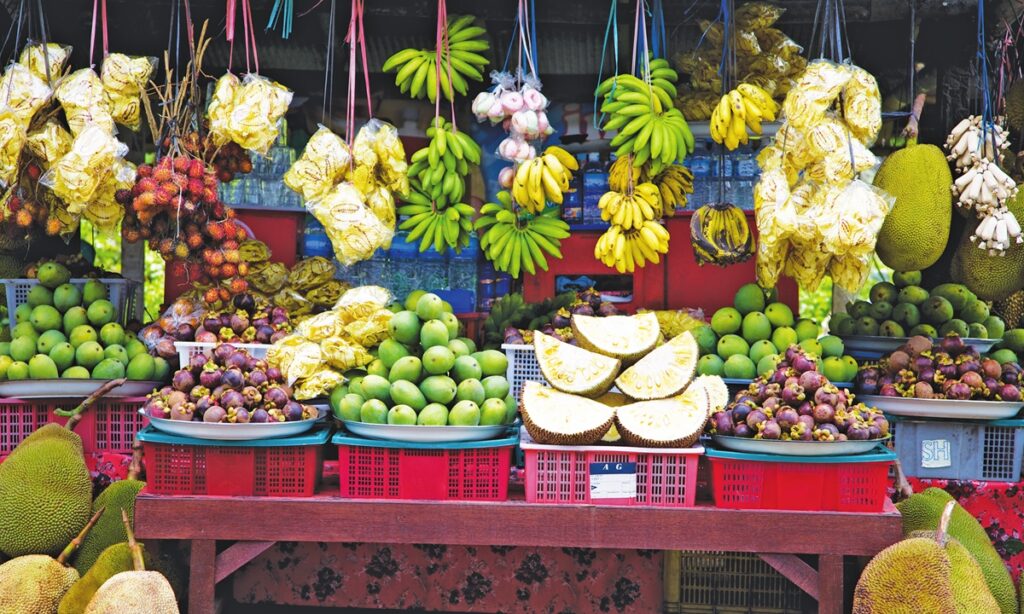
Tropical fruits such as durian, jackfruit, mango and dragon fruit are among the centre’s main imports from Southeast Asia into the Chinese market, while citrus fruits remain one of China’s principal fruit exports to ASEAN.
Durian Leads China-ASEAN Fruit Trade
Trade data displayed at the centre showed that fresh durians were the top imported fruit in 2025, reaching 805,600 tonnes with a trade value of approximately 22.89 billion yuan.
This significantly exceeded other major fruit imports, including:
- Dragon fruit: 483,500 tonnes, valued at 3.35 billion yuan
- Mangoes: 416,800 tonnes, valued at 2.17 billion yuan
- Citrus fruits: 234,700 tonnes, valued at 1.06 billion yuan
- Guavas: 62,700 tonnes, valued at 282 million yuan
The figures highlight the strong and expanding appetite among Chinese consumers for Southeast Asian tropical fruits, especially premium products such as durian.
Expansion to Boost Cold Chain and Processing Capacity
In response to rising trade volumes, the centre is now implementing the second phase of its expansion to increase processing and storage capacity.
The expansion includes dedicated facilities capable of accommodating hundreds of refrigerated fruit containers, along with additional infrastructure to improve cargo handling efficiency and strengthen the cold-chain logistics system.
These upgrades are expected to support faster, safer and more reliable delivery of perishable fruits from ASEAN producers to Chinese consumers, while also reducing supply chain bottlenecks.
Creating Jobs and Adding Value
Beyond trade facilitation, the expansion is expected to create employment opportunities in logistics, cargo handling, transportation and food processing, supporting local economic development while strengthening China-ASEAN commercial links.
The centre is also helping traders move beyond raw fruit imports by enabling value-added production. Imported fruits are being processed into products such as durian cakes and pastries, while online sales platforms and livestream marketing are helping producers and traders expand consumer reach.
A Growing Opportunity for ASEAN Agriculture
The expansion of China’s fruit trade hub reflects a broader opportunity for ASEAN’s agriculture and food sectors.
As Chinese demand for tropical fruits continues to grow, ASEAN producers can benefit from:
- Wider market access
- Stronger cold-chain logistics
- Higher-value processed fruit products
- Improved cross-border trade efficiency
- Greater participation in digital commerce and livestream sales
This momentum reinforces ASEAN’s role as a major supplier of tropical agricultural products and highlights the importance of modern logistics infrastructure in supporting regional food trade.
Looking Ahead
The continued growth of China-ASEAN fruit trade signals strong potential for deeper agricultural cooperation, investment and supply-chain integration.
With expanded logistics capacity, improved processing facilities and rising consumer demand, the Guangxi trade hub is positioned to play an even greater role in connecting ASEAN fruit producers with China’s vast consumer market.
As demand for tropical fruits continues to rise, the development marks another step forward in strengthening China-ASEAN trade connectivity and advancing regional agricultural growth.