Malaysia and the Philippines are strengthening bilateral security cooperation, with greater emphasis on intelligence sharing, maritime security and combating transnational crime, as both countries seek to reinforce peace and stability across their shared maritime region and the wider ASEAN community.
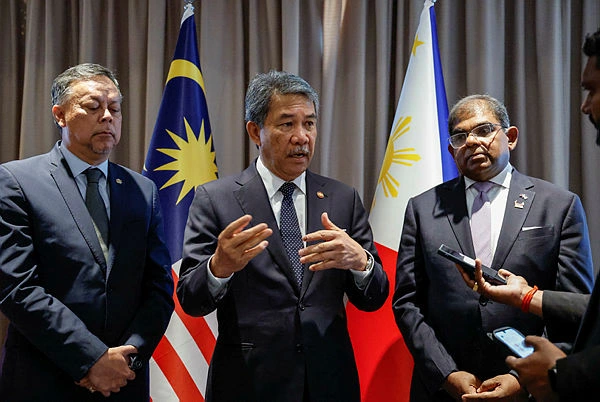
The commitments were discussed during the 9th Malaysia–Philippines Joint Commission Meeting in Manila, co-chaired by Malaysian Foreign Minister Datuk Seri Mohamad Hasan and Philippine Foreign Secretary Ma. Theresa P. Lazaro. Discussions covered security cooperation in the waters between the east coast of Sabah and the Philippines, alongside wider ASEAN efforts to address cross-border threats.
Strengthening Intelligence Sharing Against Cross-Border Crime
Cross-border criminal activities remain an important security concern for ASEAN, particularly as organised networks can operate across national boundaries and maritime jurisdictions.
Mohamad highlighted the importance of closer intelligence cooperation between ASEAN countries, noting that transnational crime can create wider regional consequences if it is not effectively contained.
Malaysia and the Philippines reaffirmed their commitment to expanding cooperation between their law enforcement agencies through targeted capacity building, technical development, technology transfer and greater intelligence exchanges.
The two countries also recognised the importance of proposed agreements addressing transnational crime, particularly measures aimed at combating the illicit trafficking and abuse of illegal drugs.
Maritime Security Remains a Key Priority
Security in the maritime areas between eastern Sabah and the southern Philippines remains a central component of bilateral cooperation.
The strategic waters connecting Malaysia, the Philippines and Indonesia are important not only for local communities but also for regional trade, tourism and economic activity.
Malaysia and the Philippines therefore continue to support the Trilateral Cooperative Arrangement (TCA) involving Indonesia, which coordinates security efforts among the three neighbouring countries.
Lazaro noted that the TCA, which marks its 10th anniversary in 2026, has made a significant contribution to maintaining security and stability within the countries’ common area of operations.
Improved Security Supports Sabah Tourism Confidence
Progress in maritime security has also generated positive implications for tourism.
According to Mohamad, confidence among foreign travellers from Europe and the United States in visiting Sabah’s east coast has increased following the absence of kidnap-for-ransom incidents since early 2020.
The development demonstrates how effective security cooperation can deliver benefits extending beyond law enforcement. A safer maritime environment can strengthen tourism confidence, encourage investment and support economic activities within coastal communities.
For Sabah in particular, maintaining confidence in its eastern tourism destinations is important for supporting the state’s wider visitor economy and international reputation.
Growing Cooperation Between Armed Forces
Malaysia and the Philippines also acknowledged increasingly close relations between their respective armed forces.
According to Lazaro, efforts are continuing to strengthen camaraderie and cooperation among personnel from the army, navy and air force of both countries.
Stronger defence relationships can improve communication and coordination while enhancing the ability of neighbouring countries to respond collectively to maritime threats and other security challenges.
Such cooperation is particularly valuable in Southeast Asia, where maritime boundaries and interconnected trade routes mean security developments in one country can quickly have implications for neighbouring states.
South China Sea Code of Conduct Remains in Focus
The discussions also touched on wider regional maritime stability.
Malaysia expressed hope that negotiations on the long-awaited Code of Conduct in the South China Sea could be finalised in 2026 during the Philippines’ ASEAN chairmanship.
Progress towards an effective Code of Conduct would represent an important development for ASEAN’s regional security architecture and could contribute to greater predictability and confidence in one of Asia’s most strategically important maritime areas.
For ASEAN, maintaining peace and stability in the South China Sea remains closely linked to regional economic security because the area supports major international shipping routes and commercial activity.
Strengthening ASEAN Through Practical Cooperation
The Malaysia–Philippines partnership demonstrates how bilateral and trilateral mechanisms can complement ASEAN’s broader regional security agenda.
The TCA between Malaysia, the Philippines and Indonesia provides a practical example of neighbouring ASEAN countries coordinating directly to address shared security concerns while supporting wider regional stability.
Expanding intelligence exchanges, law enforcement capabilities and maritime coordination could further strengthen ASEAN’s collective resilience against organised crime, drug trafficking and other transnational threats.
At the same time, improved security can create stronger foundations for tourism, investment, trade and cross-border economic development.
Looking Ahead
The latest Malaysia–Philippines Joint Commission Meeting signals a continued commitment by both countries to move beyond dialogue towards deeper operational cooperation.
By strengthening intelligence sharing, maritime security, law enforcement capabilities and defence relationships, Malaysia and the Philippines are reinforcing an important security partnership at the heart of Southeast Asia.
As ASEAN faces increasingly complex transnational challenges, cooperation between neighbouring member states will remain essential. The progress between Malaysia and the Philippines — supported by trilateral coordination with Indonesia — demonstrates how practical regional partnerships can help create a safer, more stable and economically resilient ASEAN community.