Malaysia and Brunei Darussalam have reaffirmed their commitment to ASEAN unity and centrality, underscoring the importance of regional cooperation, international law and peaceful diplomacy in maintaining stability in the South China Sea amid an increasingly complex geopolitical environment.
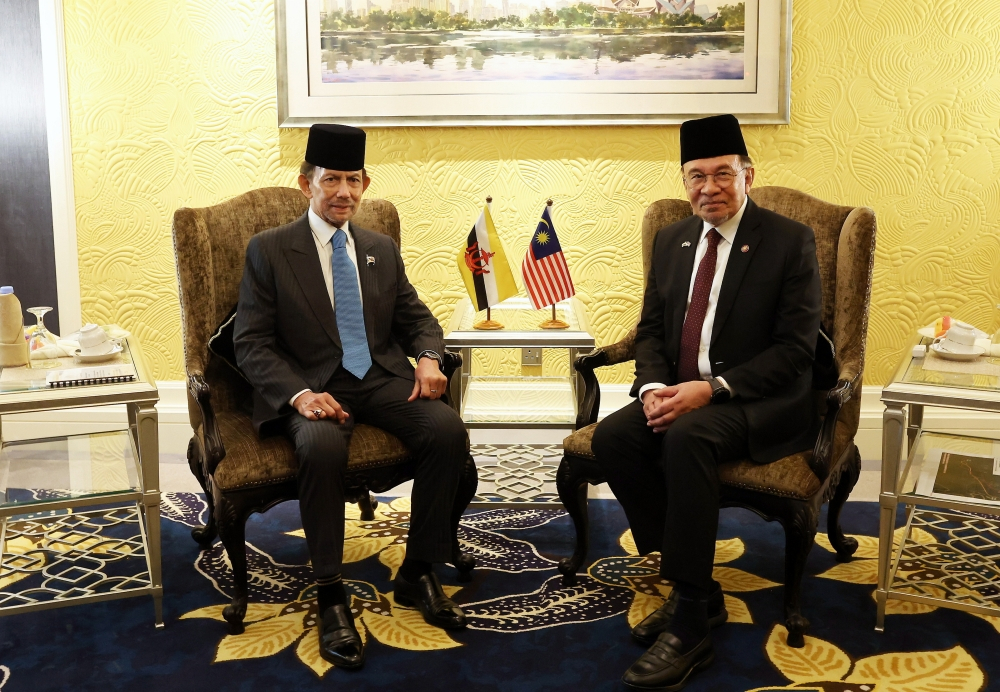
The commitment was made during the 27th Annual Leaders’ Consultation between Malaysian Prime Minister Datuk Seri Anwar Ibrahim and Sultan Hassanal Bolkiah of Brunei Darussalam, held in Bandar Seri Begawan on 22 August 2026. The annual consultation reinforced the longstanding relationship between the neighbouring countries while addressing bilateral cooperation and wider regional challenges.
ASEAN Unity at the Heart of Regional Stability
Malaysia and Brunei emphasised that ASEAN unity and centrality remain fundamental to preserving peace, stability and prosperity across Southeast Asia, particularly as the region navigates mounting geopolitical and geoeconomic pressures.
Both leaders also reiterated their commitment to advancing the ASEAN Community Vision 2045, which provides the long-term framework for building a more resilient, innovative, dynamic and people-centred ASEAN community.
Their position highlights the importance of maintaining ASEAN as a central platform for dialogue and cooperation, allowing Southeast Asian countries to collectively address regional challenges while maintaining constructive relationships with major international partners.
Peaceful Resolution of South China Sea Disputes
The South China Sea featured prominently in the leaders’ discussions, with Malaysia and Brunei reaffirming the importance of maintaining peace, security, stability and safety throughout the region.
Both countries stressed the need to preserve freedom of navigation and overflight and called for disputes to be resolved peacefully in accordance with international law, including the 1982 United Nations Convention on the Law of the Sea (UNCLOS).
The leaders also emphasised the importance of non-militarisation and self-restraint, particularly regarding activities that could complicate existing disputes or escalate tensions.
Their position reinforces ASEAN’s broader emphasis on diplomacy, dialogue and internationally recognised legal frameworks as the foundations for managing competing interests in one of the world’s most strategically important maritime regions.
Brunei Backs Malaysia’s ASEAN–China Coordinating Role
Brunei also expressed support for Malaysia’s role as Country Coordinator for ASEAN–China Dialogue Relations, particularly in facilitating ongoing negotiations towards an effective and substantive Code of Conduct in the South China Sea (COC).
Malaysia and Brunei stressed that the eventual Code of Conduct should be consistent with international law, including UNCLOS, while negotiations should take place in an environment that encourages confidence-building and greater mutual trust among regional countries.
The long-awaited COC is regarded as an important mechanism for establishing clearer expectations for conduct in the disputed waters and reducing the risk that maritime incidents develop into wider confrontations.
Stronger Defence Cooperation Supports Regional Security
Beyond diplomatic cooperation, Malaysia and Brunei also reaffirmed their commitment to strengthening security ties through the Malaysian Armed Forces and Royal Brunei Armed Forces.
Both countries welcomed continued military exchanges and training programmes while reaffirming cooperation through ASEAN-led defence platforms, including the ASEAN Defence Ministers’ Meeting (ADMM) and ADMM-Plus.
These mechanisms provide ASEAN member states and their partners with platforms for addressing both traditional security concerns and emerging challenges, ranging from maritime security to disaster response and other transnational threats.
Economic and Energy Cooperation Deepens Across Borneo
The leaders’ consultation extended well beyond regional security, with Malaysia and Brunei also advancing practical cooperation in energy, connectivity, agriculture, tourism, logistics and investment.
Particular attention was given to stronger economic links between Brunei and the Malaysian states of Sabah and Sarawak. Both leaders welcomed progress in energy cooperation, including ongoing work towards the Brunei–Sarawak power interconnection project, which forms part of the broader ASEAN Power Grid initiative.
The countries also welcomed private-sector agreements involving logistics, digital services and food products while supporting further collaboration aimed at strengthening supply chains and improving market access.
These initiatives demonstrate how Malaysia–Brunei bilateral cooperation can contribute to wider ASEAN priorities in energy resilience, connectivity and economic integration.
Improving Cross-Border Connectivity
Malaysia and Brunei are also looking to make movement across their shared Borneo border more efficient.
Both sides encouraged relevant agencies to explore the feasibility of establishing a “single checkpoint” that could streamline immigration procedures and reduce the need for multiple passport endorsements during cross-border journeys.
Major infrastructure projects including the Trans Borneo Highway and Northern Coastal Highway were also highlighted for their potential to improve the movement of people and goods while supporting tourism and economic activity across Borneo.
The two countries additionally agreed to advance the demarcation of their shared land boundary, with the survey and demarcation of the entire boundary targeted for completion by 2034 and work on the outstanding Sector F-G targeted for completion by 31 May 2027.
Cooperation Amid Wider Global Uncertainty
Malaysia and Brunei also addressed developments beyond Southeast Asia, reflecting growing concern over how international conflicts can affect ASEAN economies.
The leaders expressed concern over renewed hostilities in the Middle East and the resulting disruption to maritime traffic through the Strait of Hormuz, which has affected global energy and essential-goods supply chains. They called for safe, continuous and unimpeded passage for vessels and aircraft in accordance with international law.
The issue carries particular significance for ASEAN because disruptions to major international shipping routes can quickly translate into higher energy costs, supply-chain pressures and economic uncertainty throughout Southeast Asia.
Strengthening Malaysia–Brunei Relations Within ASEAN
The 27th Annual Leaders’ Consultation demonstrates how bilateral cooperation between neighbouring ASEAN countries can contribute directly to wider regional resilience.
Malaysia and Brunei’s expanding collaboration spans security, energy, trade, infrastructure, tourism, agriculture, education and disaster management, creating practical links between their bilateral relationship and ASEAN’s wider integration agenda.
Their support for the ASEAN Power Grid, stronger Borneo connectivity and coordinated approaches to regional security also illustrates how national and bilateral initiatives can reinforce broader ASEAN objectives.
Looking Ahead
Malaysia and Brunei’s renewed commitment to ASEAN unity comes at an important moment for Southeast Asia.
As geopolitical competition intensifies and maritime tensions remain a regional concern, both countries are advocating an approach centred on ASEAN centrality, peaceful dialogue, self-restraint and adherence to international law.
Progress towards an effective South China Sea Code of Conduct will remain an important test of ASEAN’s ability to manage regional differences while preserving stability and confidence.
At the same time, expanding Malaysia–Brunei cooperation in energy, connectivity and trade demonstrates that ASEAN unity extends beyond diplomacy. By translating regional principles into practical economic and security cooperation, the two neighbouring countries are helping strengthen the foundations for a more connected, resilient and peaceful ASEAN community.